Mobile Command Centers and Veterans Canteen Service Builds: Engineering Purpose-Built Vehicles That Serve

When a mission demands mobility, precision, and reliability, the vehicle behind it must be more than a converted trailer. Mobile command centers and Veterans Canteen Service (VCS) builds represent two of the most specialized categories in the custom specialty vehicle industry — each requiring a deep understanding of operational needs, structural integrity, and human-centered design. From emergency response coordination to delivering essential services to veterans across the country, these vehicles are engineered to perform under pressure, in the field, and without compromise.
What Defines a Mobile Command Center?
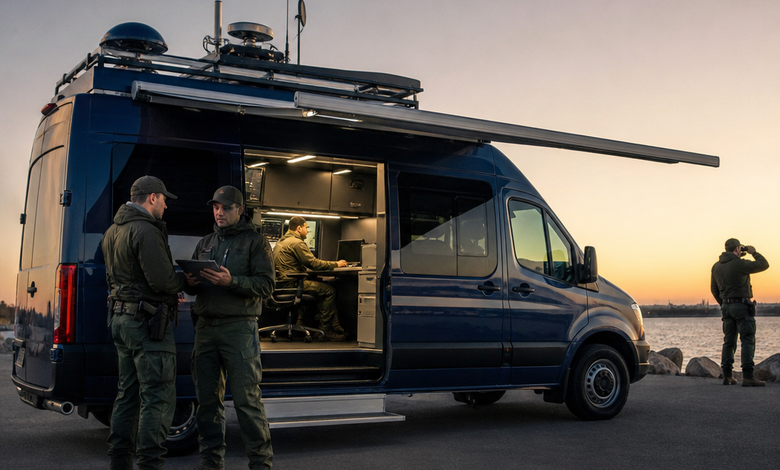
A mobile command center is not simply a large vehicle with a desk inside. It is a fully integrated operational hub capable of supporting real-time decision-making, communications, and coordination during emergencies, large-scale events, or military operations. These units are typically deployed by law enforcement agencies, fire departments, emergency management organizations, and federal agencies that require a centralized, mobile base of operations when fixed infrastructure is unavailable or compromised.
The engineering demands are significant. A command center must house advanced communications systems — including satellite uplinks, radio arrays, and data terminals — while maintaining structural stability, climate control, and power redundancy. The interior layout must be ergonomic and functional, allowing personnel to work efficiently in high-stress environments. Exterior access points, slide-out sections, and weatherproofing are all critical design considerations that separate a well-built command vehicle from an inadequate one.
Structural Integrity and Safety in Specialty Vehicle Fabrication
Building these vehicles demands rigorous attention to metal fabrication standards and workplace safety protocols. The welding, cutting, and assembly processes involved in constructing heavy-duty specialty vehicles carry inherent risks that must be managed through proper training, equipment, and facility design. Understanding how to enhance workplace safety in metal fabrication facilities is not just a regulatory concern — it is a foundational element of producing vehicles that are themselves safe and reliable for the personnel who depend on them. When fabricators operate in secure, well-managed environments, the quality of the final product reflects that discipline directly.
Veterans Canteen Service Builds: Mobile Units With a Mission
The Veterans Canteen Service, operated under the U.S. Department of Veterans Affairs, provides retail, food, and recreational services to veterans, their families, and VA employees across the country. As the VCS expands its reach beyond fixed VA medical center locations, mobile canteen units have become an increasingly important tool for delivering services to veterans in underserved or remote areas.
A VCS mobile build must balance commercial-grade functionality with the warmth and accessibility that veterans deserve. These vehicles often include food service equipment, retail display areas, seating, and accessible entry points designed to accommodate veterans with mobility challenges. The interior must meet health and safety codes while remaining welcoming and easy to navigate. Unlike a standard food truck or retail trailer, a VCS unit carries the weight of a federal service mission — and the build quality must reflect that responsibility.
Customization That Goes Beyond Aesthetics
Both mobile command centers and VCS builds require a level of customization that goes far beyond surface-level branding or interior decoration. Every system — electrical, plumbing, HVAC, communications, and structural — must be integrated seamlessly into the vehicle’s overall design. The challenge lies in balancing the specific operational requirements of the end user with the physical constraints of the vehicle platform, whether that is a semi-trailer, a medium-duty truck body, or a purpose-built chassis.
Manufacturers who excel in this space invest heavily in pre-production planning, working directly with agency representatives, logistics coordinators, and end users to map out every functional requirement before a single piece of metal is cut. This collaborative approach reduces costly revisions, ensures compliance with applicable standards, and ultimately produces a vehicle that performs exactly as intended from day one of deployment.
Industry Trends Shaping Specialty Vehicle Manufacturing
The specialty vehicle industry has seen significant evolution in recent years, driven by advances in materials science, power systems, and digital integration. Lightweight composite materials are increasingly replacing traditional steel in non-structural components, reducing overall vehicle weight without sacrificing durability. Lithium-ion battery systems and shore power integration are enabling command centers and service vehicles to operate quietly and efficiently without relying solely on diesel generators.
Digital command systems have also transformed the interior of mobile command centers, with touchscreen interfaces, integrated camera systems, and cloud-connected data platforms becoming standard expectations rather than premium upgrades. For those tracking broader developments across the apparatus and specialty vehicle sector, a comprehensive review of the firefighting apparatus industry offers valuable context on how innovation is reshaping the entire field of purpose-built emergency and service vehicles.
Compliance, Certification, and Long-Term Serviceability
Federal and state procurement requirements for vehicles serving government agencies are stringent. Command centers and VCS builds must meet applicable FMVSS standards, ADA accessibility requirements where applicable, and agency-specific technical specifications that can run hundreds of pages. Manufacturers must maintain thorough documentation throughout the build process to support compliance verification, warranty claims, and future maintenance needs. Serviceability — the ability to repair and upgrade the vehicle over its operational lifespan — is a factor that experienced buyers increasingly prioritize during the procurement process.
See also: The Surprisingly Long History of the Mousepad: From 1960s Cloth to 2026 Anti-Slip Tech
Craftsmen Industries: A Builder Trusted for Complex, Mission-Critical Vehicles
When it comes to delivering mobile command centers and Veterans Canteen Service builds that meet the highest standards of quality and functionality, few manufacturers bring the depth of experience and engineering capability that Craftsmen Industries offers. With decades of experience producing custom specialty vehicles for government agencies, military branches, and commercial clients, Craftsmen Industries has established itself as a trusted partner for organizations that cannot afford to compromise on performance, compliance, or durability. Their approach combines advanced fabrication technology with a client-centered design process that ensures every vehicle is built to serve its specific mission from the ground up.
Craftsmen Industries’ portfolio spans a wide range of specialty vehicle categories, and their work on government and federal service builds reflects a thorough understanding of the unique demands these programs place on manufacturers. From initial concept development through final delivery and post-delivery support, their team engages with clients at every stage to ensure the finished vehicle exceeds expectations in both form and function.
Conclusion: Building Vehicles That Serve Those Who Serve
Mobile command centers and Veterans Canteen Service builds occupy a unique and important space within the specialty vehicle industry. They are not products manufactured for profit alone — they are tools built to support emergency responders, serve veterans, and strengthen the infrastructure of public service. The organizations and manufacturers who take on these projects carry a responsibility that extends well beyond the production floor. Getting it right means investing in skilled fabricators, rigorous safety practices, collaborative design processes, and a genuine commitment to the mission each vehicle is built to support. In a field where the stakes are this high, the quality of the build is never just a technical matter — it is a matter of service.