Introduction
Attackers in the ever-shifting environment of cybersecurity are constantly in search of new modes of attack. The replay attack is one of the most destructive techniques with less known characteristics. This cyber threat is technically sounding but still has long-term consequences on digital security- particularly on industries that deal with sensitive transactions, authentication systems, and biometric data. This blog post will take us through understanding what replay attacks are, how they take place, their effect in the real world, and the role that some technologies such as deepfake detection and liveness detection are playing in curbing these attacks.
What is Replay Attack?
A playback attack or replay attack is a network attack where valid data is maliciously repeated or delayed. Consider a case where a hacker intercepts a valid log in session, and then later on retransmits the log in session to achieve unauthorized access. The user might have logged off, but the attacker might pretend to be the user by retransmitting the same credentials or tokens.
Such attacks are of special concern in the environment where authentication is based on static mechanisms or where security is otherwise aperiodic (e.g., due to the absence of timestamps or unique session identifiers).
And here is how to do it:
Interception: The intruder gets hold of the original communication between two parties. This may encompass log in details, fingerprints or money transfers.
Storage: The data which is captured is saved to be used in the future.
Rebroadcasting: The hacker transmits the data intercepted to the initial server impersonating as the real user.
Since the data being used is initially correct and verified, then it may not be identified as malicious unless an additional security is present.
Real-World Examples
Biometric Systems: When using facial recognition, an attacker can get a video recording of the face during the authentication process and subsequently replay them to fool the system. That is very hazardous on financial applications, identity verification systems and in places of high security.
Banking & Finance: Replay attacks on banking applications have provided hackers with an opportunity to steal money because they can copy the transaction request sent previously and use it to make payments.
IoT Devices: IoT devices frequently do not offer strong encryption and authorization and are susceptible to replay attacks to hijack a camera, door lock or home automation.
Deepfake Detection Role
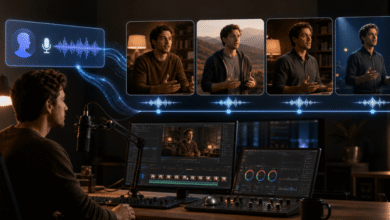
Deepfake technology has increased the risk of replay attacks, particularly within a video-based authentication system. AI-based synthetic videos or audio that closely resemble the voice or face of the victim can now be used by the attackers. Here, deepfake detection comes in handy.
Deepfake detection software scans the media to identify such inconsistencies as the lighting changes, facial dynamics, audio synchronization, and other variables to show whether a video is authentic or artificial. Such tools are currently being implemented in security systems to make sure that the media being offered in the authentication process is real-time and not tampered.
Replay Attack Prevention How to
Although it is almost impossible to avoid any types of cyberattacks, there are some steps that will help mitigate the chance of a replay attack:
Liveness Detection: Liveness detection is one of the best defenses; this is a measure to confirm that the person is providing a biometric input at that precise time, and not to provide a recording or deepfake.
Encryption and Secure Channels: Encryption of data when it is being sent makes it difficult to be intercepted by an attacker and used in malicious ways.
Time Stamps & Session Tokens: Unique and time sensitive session tokens can make any network intercepted data unusable after a short period of time.
Multi-Factor Authentication (MFA): Having multiple levels of verification will make sure that a replayed token is not enough to gain access.
Behavioral Biometrics: Another factor in dynamic security is to analyze the unique behavior of a user such as speed of typing, swipe pattern, tone of voice etc.
Regulatory and Industry Implications
With an increasing number of industries using biometric and AI-based technologies, there is an urgent necessity to equip it with protection against replay attacks. The regulatory agencies are also demanding higher levels of identity verification particularly in fintech, healthcare, and border control systems. Liveness and deepfake detection tools are not only becoming optional but mandatory.
Conclusion
The replay attack may sound like just a piece of data multiplied, nevertheless, its consequences are enormous and may be catastrophic. Whether it is evading biometric verification or hacking monetary transactions, this risk makes it clear that there is indeed a need to have multi-layer security measures. Since attackers are becoming more sophisticated, particularly in the advent of deepfake technology, defenders are forced to remain a step ahead by using intelligent security solutions, such as liveness detection and deepfake detection.
It is possible to improve their digital protection in many ways by learning about the mechanics of replay attacks and implementing high-level prevention strategies, both businesses and users can considerably enhance their digital defenses.