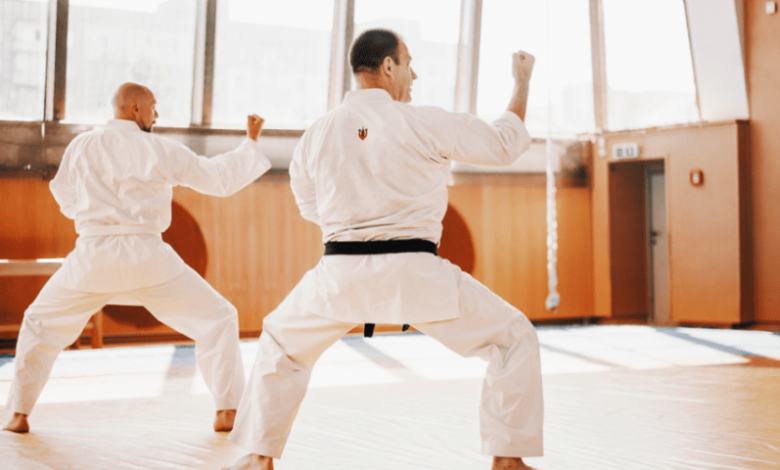
Starting something completely new as an adult can feel intimidating, especially when it involves physical activity. If you have never practiced martial arts before, you may wonder whether you will be able to keep up, learn the techniques, or feel comfortable around more experienced students.
The good news is that you do not need a martial arts background to begin. Beginner programs are designed to introduce new students to the basic movements, terminology, and training habits step by step. You can start from your current fitness level and gradually improve through consistent practice.
For many people interested in martial arts for Adults, the biggest challenge is not learning the first technique. It is overcoming the hesitation that comes before walking into the first class.
You Do Not Need Previous Experience
Martial arts is a skill that has to be learned. Instructors do not expect a new student to already know how to punch, kick, block, move, or maintain a proper stance.
Your first classes will generally focus on fundamentals rather than advanced techniques.
Depending on the martial art, you may learn:
- Basic stance and posture
- Footwork and movement
- Simple strikes or blocks
- Defensive positions
- Balance and coordination
- Breathing and body control
- Basic combinations
- Training etiquette
These fundamentals create the foundation for everything that comes later.
You Do Not Have to Be in Great Shape Before Starting
One of the most common reasons adults delay martial arts is the belief that they need to become fit first.
In reality, training itself can help you improve your fitness.
You may initially find yourself getting tired more quickly than expected. That is normal when your body is adapting to a new activity. With regular practice, your stamina, coordination, and movement can gradually improve.
Instead of waiting until you reach a certain fitness level, start at an intensity that is appropriate for your current ability.
What Happens During a First Class?
Your first class will usually be more about learning than proving yourself.
A beginner-friendly session may include a warm-up followed by basic technique instruction. The instructor may demonstrate a movement and then give students time to practice it.
Depending on the style, you might work individually, with a partner, on training equipment, or through controlled drills.
You should expect to make mistakes.
You may forget the sequence of movements, use the wrong foot, lose your balance, or need the instructor to demonstrate something several times.
That is part of learning.
Feeling Awkward Is Completely Normal
Adults often become more self-conscious when learning something new.
You may look around the room and notice students who seem much more experienced. It is easy to compare your first class with someone else’s years of training.
That comparison is not useful.
The experienced student has already gone through the beginner stage. Your only responsibility is to focus on your own learning.
A productive first class might simply mean:
- Listening carefully
- Trying the techniques
- Asking questions
- Following safety instructions
- Completing the session
- Coming back for another class
You do not need to impress anyone.
Choosing the Right Martial Art
There are many different martial arts for Adults and they do not all provide the same training experience.
Some emphasize striking techniques, while others focus more heavily on grappling, throws, movement, forms, or controlled self-defense practice.
When choosing a style, think about what you actually want from training.
If fitness is your main goal
You may prefer a style with plenty of movement and conditioning.
If self-defense interests you
Look for training that teaches awareness, positioning, defensive skills, and controlled practical applications.
If you enjoy traditional training
Karate, Taekwondo, and other traditional disciplines may appeal to you because of their structured progression and emphasis on technique and discipline.
If you prefer grappling
Brazilian Jiu-Jitsu and related styles may be interesting if you enjoy learning positional skills and controlled partner training.
There is no need to choose based only on what looks impressive. Your personal goals and enjoyment matter.
Adult Beginners Can Progress at Their Own Pace
Everyone learns differently.
One person may quickly understand footwork but struggle with combinations. Another may have good coordination but need more time to develop flexibility.
Progress is rarely perfectly consistent.
Some weeks may feel easy, while others may feel frustrating. The important thing is to keep practicing instead of expecting improvement every single session.
A beginner can gradually move from:
Learning individual movements → Combining techniques → Improving timing → Developing confidence → Becoming more comfortable under pressure
This process takes time, and that is completely normal.
You Do Not Have to Spar Immediately
Another concern adults sometimes have is being forced into physical contact before they are ready.
Training methods vary between martial arts and individual schools, but beginner programs can use controlled drills before introducing more demanding forms of partner work.
If sparring is part of the program, ask the instructor how beginners are introduced to it.
A good training environment should have clear rules and appropriate supervision. You should understand what is expected before participating in higher-intensity activities.
Safety Should Be a Priority
Martial arts is physical activity, so some level of risk is present. However, beginners can learn progressively when classes are properly structured.
Before starting, tell the instructor about relevant physical limitations or previous injuries.
During training:
- Follow instructions carefully.
- Learn technique before increasing speed.
- Use appropriate protective equipment when required.
- Take breaks when necessary.
- Do not ignore unusual pain.
- Avoid trying to match an experienced student’s intensity.
- Give your body time to recover.
Starting slowly can help you build a sustainable training habit.
Adults Have an Advantage Too
Being an adult does not mean you are automatically at a disadvantage.
Adults often bring qualities that can help with learning, including patience, discipline, responsibility, and the ability to understand why a particular technique is being taught.
You may also have clearer reasons for training.
Perhaps you want to become more active, learn self-defense, manage stress, build confidence, or simply find an interesting hobby.
Having a clear purpose can help you stay committed when the initial excitement begins to fade.
Martial Arts Can Support Physical Fitness
Regular martial arts training can involve many different forms of physical activity.
Depending on the discipline and class structure, you may work on:
- Cardiovascular endurance
- Muscular endurance
- Balance
- Coordination
- Flexibility
- Agility
- Core stability
- General movement skills
The amount of physical conditioning varies from one program to another.
If fitness is important to you, ask what a typical adult beginner class involves before joining.
The Mental Side Is Important Too
Martial arts is not only about physical movement.
Learning combinations and responding to instructions requires concentration. Repeating techniques requires patience. Making mistakes and trying again can develop persistence.
Over time, the learning process may help you become more comfortable with being challenged.
Instead of expecting yourself to understand everything immediately, you learn to break complicated skills into smaller parts.
That mindset can be useful outside martial arts as well.
Consistency Matters More Than Intensity
A common beginner mistake is doing too much too soon.
Someone may attend several classes during the first week, become extremely sore, and then stop training for a long period.
A more sustainable approach is to create a schedule you can realistically maintain.
For many beginners, attending a couple of classes each week can provide enough regular practice to build familiarity while still allowing recovery time.
As your body adapts, you can decide whether increasing your training frequency makes sense.
What Should You Wear?
You usually do not need expensive equipment for your first class.
Depending on the program, comfortable athletic clothing may be enough for an introductory session. Some traditional martial arts eventually require a specific uniform, while other disciplines may have different equipment requirements.
It is usually better to ask the instructor what beginners need before purchasing anything.
There is no reason to spend a lot of money before you know whether you enjoy the training.
How to Find a Beginner-Friendly Program
The environment you choose can have a major impact on your experience.
When considering martial arts for Adults, look for a program that clearly welcomes beginners and provides appropriate instruction.
Consider asking:
- Are beginner classes available?
- How are new students introduced to training?
- What happens during the first class?
- Is sparring required?
- What equipment will I need?
- How does the instructor handle different fitness levels?
- Are adults of different ages and experience levels welcome?
The answers can help you understand whether the program matches your expectations.
Don’t Let Age Stop You
Adults often think they missed their opportunity because they did not start martial arts as children.
There is no need to compare your starting point with someone who has trained since childhood.
Your goal can simply be to become better than you were when you started.
You can begin by learning one technique, then another. Over time, those individual skills become part of a larger system.
Starting later does not mean your progress has to be meaningless. It simply means your journey begins where you are today.
Give Yourself Time to Adjust
The first few weeks may feel unfamiliar.
You may experience muscle soreness, confusion about techniques, or difficulty remembering combinations. These challenges usually become easier as your body and mind become accustomed to the training environment.
Try not to judge the entire experience based on one class.
Give yourself enough time to understand the routine and discover whether you enjoy the process.
Conclusion
Yes, you can absolutely start martial arts as an adult without previous experience. You do not need to be athletic, flexible, strong, or knowledgeable before attending your first class. Beginner training exists specifically to teach you the fundamentals from the ground up.
For anyone interested in martial arts for Adults, the most important steps are choosing a suitable program, starting at an appropriate pace, listening to your instructor, and remaining consistent.
You may feel nervous before your first class, but being a beginner is nothing to be embarrassed about. Every experienced martial artist once had a first day. Give yourself permission to learn slowly, make mistakes, and improve one step at a time.